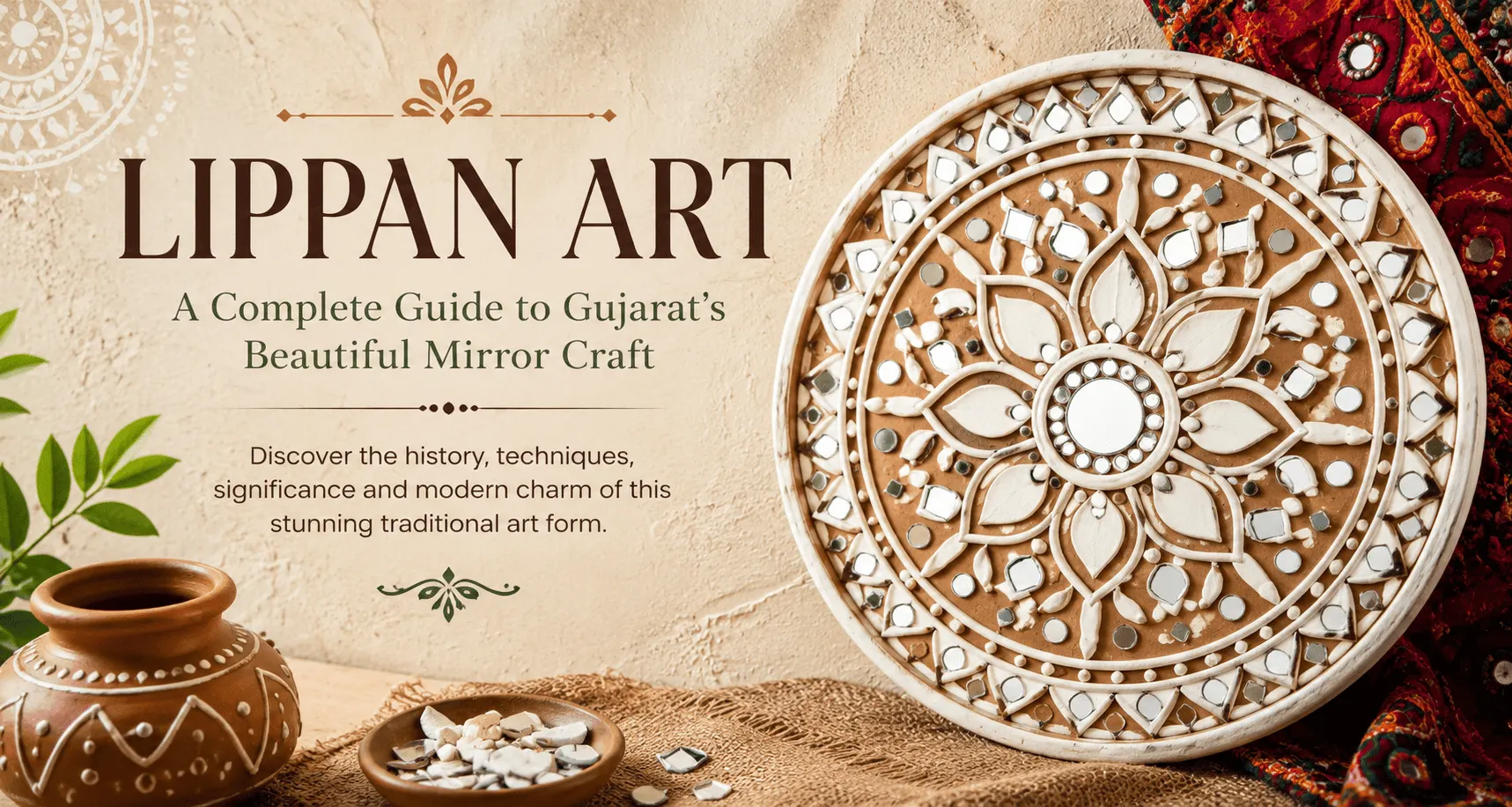

Lippan Art, also known as Mud and Mirror Work, is one of Gujarat’s most iconic traditional crafts. Originating from the arid region of Kutch (Kachchh), Gujarat, this centuries-old art form combines natural clay with sparkling mirrors to create mesmerizing wall decorations. Today, Lippan Art has evolved beyond traditional homes and has become a favorite choice for modern interior décor.
Whether you’re decorating your living room, bedroom, hallway, office, or gifting a handcrafted masterpiece, Lippan Art brings elegance, culture, and artistic charm into every space.
What is Lippan Art?
Lippan Art is a traditional decorative technique where artisans create raised patterns using clay and embellish them with small mirrors. The word “Lippan” means “to apply” or “to coat” in the local language, referring to the process of applying clay onto walls.
Historically, this art was used to decorate the mud walls of homes in the villages of Kutch. Apart from beautifying houses, the mirrors reflected natural light, making interiors appear brighter and more vibrant.
Today, artisans create Lippan Art on MDF boards, wooden bases, and canvas, making it suitable for contemporary homes while preserving its traditional essence.
The History of Lippan Art
Lippan Art dates back several centuries and is deeply rooted in the culture of the Rabari, Meghwal, Mutwa, and Harijan communities of Gujarat.
Traditionally, women handcrafted these beautiful designs on the walls of their homes using:
- Local clay
- Camel dung
- Natural adhesives
- Small handcrafted mirrors
The geometric patterns, floral motifs, peacocks, elephants, mandalas, and sacred symbols reflected the artistic heritage and daily life of the region.
Despite modernization, skilled artisans continue to preserve this remarkable craft using contemporary materials and innovative designs.
Why Mirrors are Used in Lippan Art
Mirrors play a significant role in Lippan Art for both practical and decorative reasons.
- Decorative Beauty – Tiny mirrors catch natural and artificial light, creating a sparkling effect that enhances the beauty of any room.
- Symbol of Positivity – In Indian traditions, mirrors are believed to reflect positive energy and ward off negativity.
- Better Lighting – Before electricity became common, mirrors reflected sunlight and oil lamp light, naturally illuminating homes.
- Cultural Significance – Mirror work has been part of Gujarat’s textile and handicraft traditions for generations.
How Handmade Lippan Art is Created
Creating authentic Lippan Art requires patience, creativity, and exceptional craftsmanship.
Step 1: Design Planning
The artisan sketches the design, which may include:
- Mandalas
- Floral patterns
- Lotus
- Tree of Life
- Peacock
- Elephant
- Om symbol
- Ganesha
- Abstract geometric patterns
Step 2: Preparing the Surface
- A sturdy MDF board, plywood, or wooden base is prepared for the artwork.
Step 3: Clay Work
- A clay-like mixture is carefully applied to create raised patterns and textures.
Step 4: Mirror Placement
- Hand-cut mirrors of different shapes are embedded into the wet design.
Step 5: Drying
- The artwork is left to dry naturally.
Step 6: Painting and Finishing
Modern Lippan Art often features elegant colors such as:
- White
- Golden
- Silver
- Beige
- Off-white
- Antique bronze
Finally, the piece is sealed for durability.
Types of Lippan Art Designs
Modern artisans have introduced numerous beautiful styles.
1. Round Lippan Mirrors
Perfect for:
- Entryways
- Living rooms
- Hallways
2. Mandala Lippan Art
- Ideal for meditation spaces and bedrooms.
3. Tree of Life Lippan Art
- Represents growth, prosperity, and harmony.
4. Floral Lippan Art
- Adds elegance to modern interiors.
5. Peacock Lippan Art
- A symbol of beauty and grace.
6. Ganesha Lippan Art
- Popular for pooja rooms and festive decorations.
Why Lippan Art is So Popular Today
Modern homeowners love Lippan Art because it perfectly blends traditional craftsmanship with contemporary aesthetics.
Some reasons for its popularity include:
- Handmade craftsmanship
- Elegant mirror detailing
- Unique wall décor
- Suitable for modern and traditional interiors
- Excellent gifting option
- Supports local artisans
- Long-lasting beauty
- Easy wall installation
Best Places to Display Lippan Art
Lippan Art enhances almost every part of a home.
- Living Room – Creates a stunning focal point.
- Entrance Wall – Offers guests a warm and artistic welcome.
- Dining Area – Adds elegance during family gatherings.
- Bedroom – Brings warmth and sophistication.
- Pooja Room – Traditional motifs complement spiritual spaces beautifully.
- Office – Adds creativity and cultural richness.
How to Choose the Right Lippan Art
When purchasing Lippan Art, consider:
- Size according to your wall
- Handmade detailing
- Quality mirror finish
- Durable base material
- Color that complements your décor
- Traditional craftsmanship
- Secure hanging hardware
How to Care for Lippan Art
Proper care helps preserve its beauty for years.
- Dust regularly with a soft microfiber cloth.
- Avoid excessive moisture.
- Do not scrub the mirror pieces.
- Keep away from direct water exposure.
- Hang securely on a sturdy wall.
Lippan Art as a Perfect Gift
Lippan Art makes a thoughtful and memorable gift for:
- Housewarming ceremonies
- Weddings
- Anniversaries
- Festivals like Diwali
- Mother’s Day
- Corporate gifting
- Birthday celebrations
Its handcrafted beauty ensures every piece is unique.
Why Choose Handmade Lippan Art?
Unlike mass-produced wall décor, handmade Lippan Art reflects the dedication and skill of Indian artisans. Every pattern is carefully crafted, making each piece one of a kind.
By choosing handmade Lippan Art, you are not only decorating your home but also helping preserve India’s rich cultural heritage and supporting traditional artisans.
Final Thoughts
Lippan Art is much more than decorative wall art—it is a celebration of Gujarat’s rich artistic traditions, skilled craftsmanship, and timeless beauty. Whether you prefer a minimalist modern home or a traditional Indian aesthetic, Lippan Art effortlessly enhances your space with elegance, warmth, and cultural charm.
If you’re looking to add a handcrafted touch to your home, explore beautifully designed handmade Lippan Art wall décor and mirrors that blend traditional artistry with contemporary style.
Frequently Asked Questions (FAQs)
-
- What is Lippan Art?
Lippan Art is a traditional mud and mirror craft from the Kutch region of Gujarat, known for its intricate raised patterns and decorative mirrors. - Is Lippan Art handmade?
Yes, authentic Lippan Art is handcrafted by skilled artisans, making every piece unique. - Where can I use Lippan Art in my home?
You can display it in living rooms, bedrooms, hallways, dining areas, pooja rooms, offices, or entryways. - Is Lippan Art suitable for modern interiors?
Absolutely. Contemporary Lippan Art designs blend traditional craftsmanship with modern styles, making them ideal for today’s homes. - How do I clean Lippan Art?
Use a soft, dry microfiber cloth to remove dust. Avoid using water or harsh cleaning chemicals. - Is Lippan Art a good gift?
Yes, it is an excellent gift for housewarming parties, weddings, anniversaries, festivals, birthdays, and other special occasions. - Why is Lippan Art so popular?
Its handcrafted beauty, cultural significance, reflective mirror work, and ability to complement both traditional and modern décor make it a timeless favorite.
- What is Lippan Art?